


The Origin and Types of Toilet Paper, Napkins, and Facial Tissues
I. Toilet Paper
Origin: Before the widespread use of paper, people used alternatives such as bamboo slips (known as "ce chou"), sponge sticks, and corn cobs. China began using paper for anal cleansing as early as the Tang Dynasty, with the practice becoming more common during the Yuan Dynasty and widespread during the Ming and Qing Dynasties. The modern toilet paper industry began in 1857, when American merchant Joseph Gayetty invented the first commercial toilet paper. In 1890, the Scott brothers introduced the rolled toilet paper format. In 1930, the German company Hakle helped transform toilet paper into a mainstream consumer product. Since the 1990s, wet toilet paper (moist toilet tissue) has emerged as a significant product category.
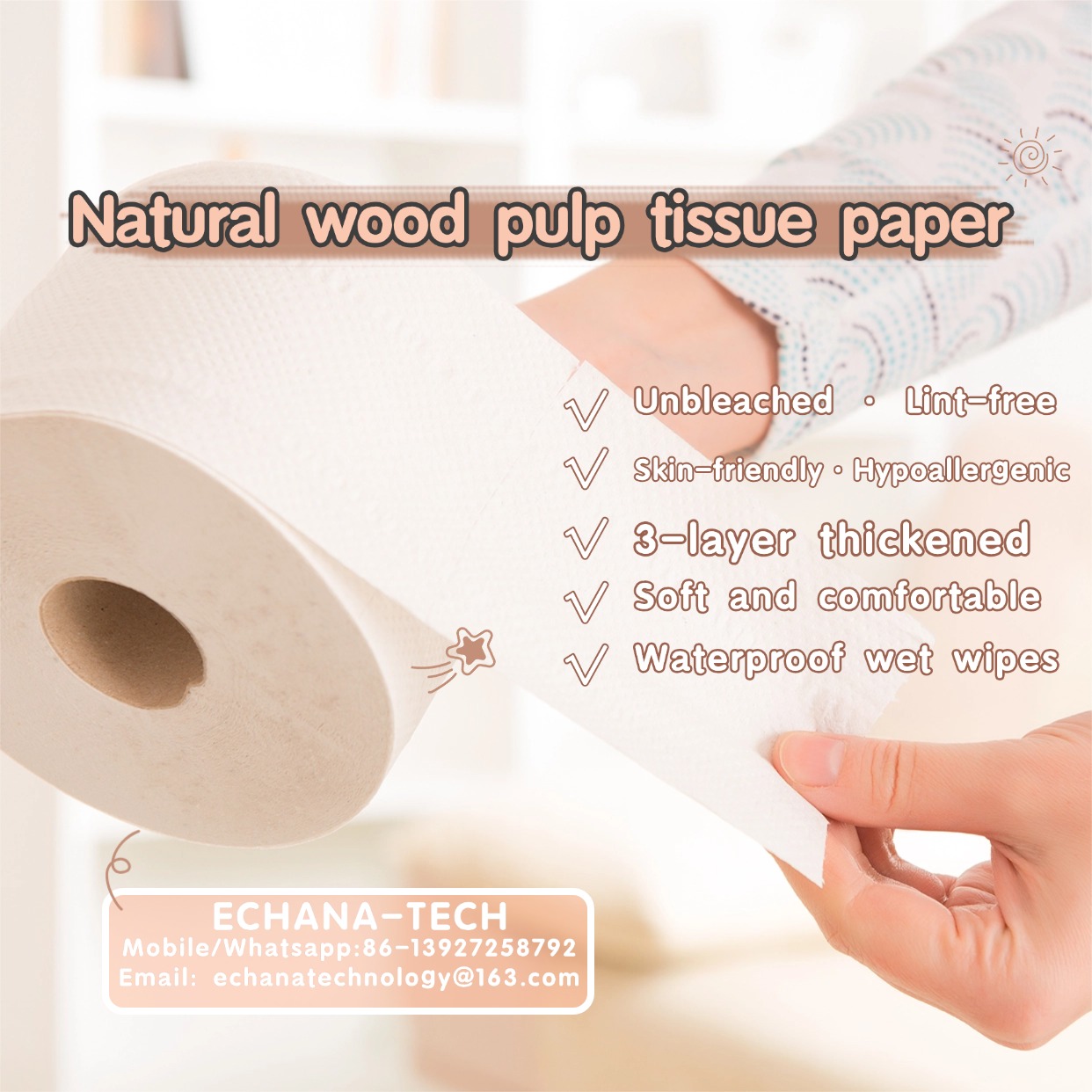
Types: Rolled toilet paper (single/double/triple ply), interleaved toilet paper (60-120 sheets per pack), wet toilet paper (flushable and dispersible), and large-roll commercial toilet paper. It complies with the national standard GB/T 20810, permits the use of recycled pulp, requires a bacterial colony count of no more than 600 CFU/g, is designed to disintegrate easily in water, and is strictly prohibited for wiping the mouth.
II. Napkins (Dinner Napkins)
Origin: Napkins originated from ancient table manners. In medieval Europe, aristocrats used fine linen napkins. The first paper napkins were produced in the United Kingdom in 1887. In the 1930s, colored and printed paper napkins became popular in the United States. After the 1960s, multi-layer embossed products became the norm.
Types: Flat napkins, embossed/printed napkins, and disposable placemats. They comply with the national standard GB/T 20808, require virgin pulp, have a bacterial colony count of no more than 200 CFU/g, and are suitable for wiping the mouth.
III. Facial Tissues (Pocket Tissues)
Origin: The predecessor of facial tissue was the cloth handkerchief, used in ancient Egypt and by medieval European nobility. In 1924, the American company Kimberly-Clark invented the first disposable facial tissue (Kleenex), initially marketed for makeup removal. It was promoted as a "disposable handkerchief" in 1929. Portable pocket-sized packs entered the market in the 1980s.
Types: Interleaved facial tissues (boxed or soft pack), portable pocket tissues (6-12 sheets per pack), scented/moisturizing/printed/embossed facial tissues. They comply with the national standard GB/T 20808, require virgin pulp, and have the same hygiene standards as dinner napkins.
IV. Key Differences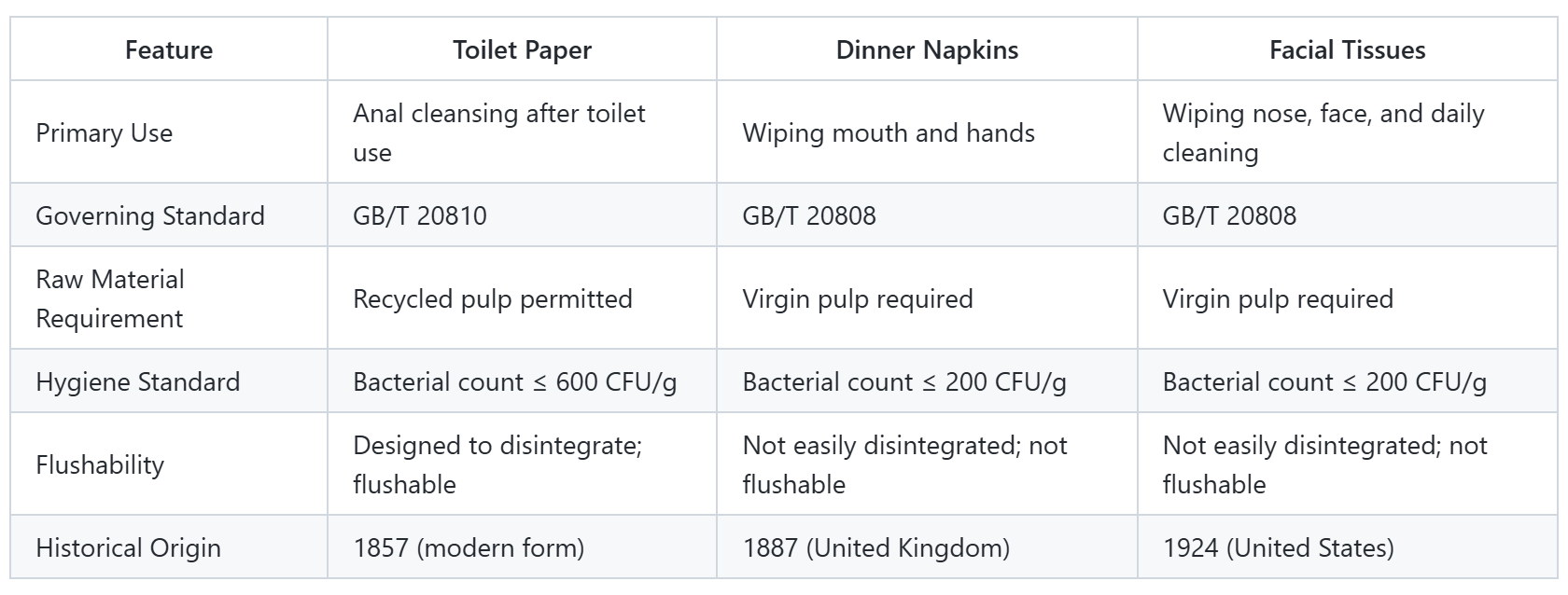
V. Purchasing Recommendations
1. Use toilet paper for toilet cleaning, dinner napkins for dining, and facial tissues for daily facial hygiene.
2. Toilet paper must not be used for wiping the mouth; tissue paper (dinner napkins and facial tissues) is suitable for facial use.
3. When purchasing tissue paper, look for the GB/T 20808 standard marking to ensure the use of virgin pulp.
4. Dispose of toilet paper by flushing; dispose of tissue paper (dinner napkins and facial tissues) in the trash.
5. Individuals with sensitive skin should choose fragrance-free and fluorescent agent-free products.