



Adult Diaper Buying Guide From Understanding to Selection
I. Introduction Breaking Prejudices and Confronting Needs
In traditional perceptions, diapers always seem to be associated exclusively with infants or elderly individuals with incontinence. However, with the evolution of social awareness and advancements in product technology, adult diapers have become essential daily aids for many adults. Whether due to postpartum recovery, post-operative care, long-distance travel, work-related stress, or age-related incontinence, selecting the appropriate adult diaper can significantly enhance quality of life.
This guide will systematically introduce the core categories of adult diapers—incontinence pants and menstrual pants—helping readers understand their fundamental differences, target populations, and key purchasing considerations, so that everyone in need can find the most suitable product.
II. Core Differences Between Incontinence Pants and Menstrual Pants
1. Design Intent and Core Functions
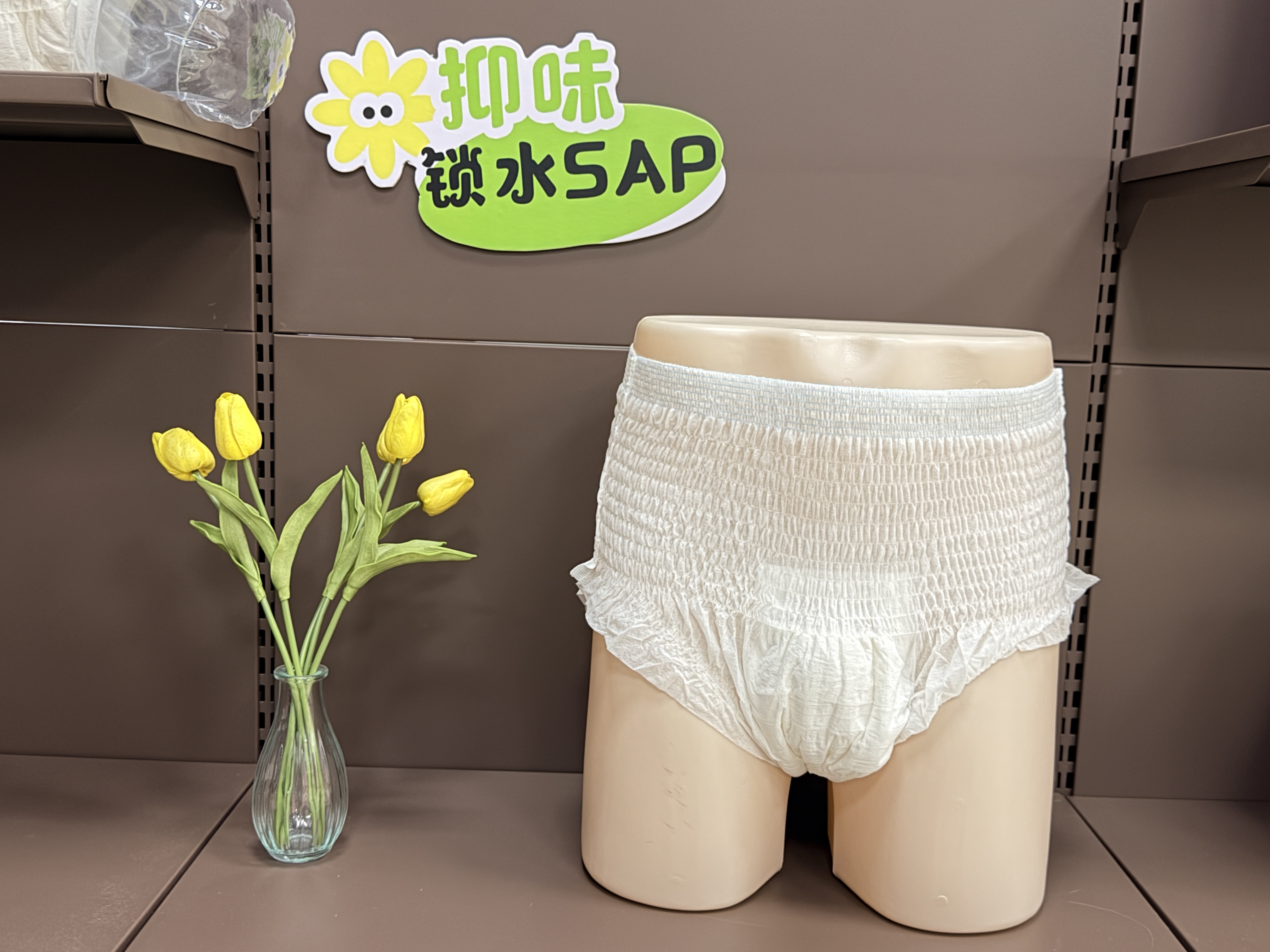
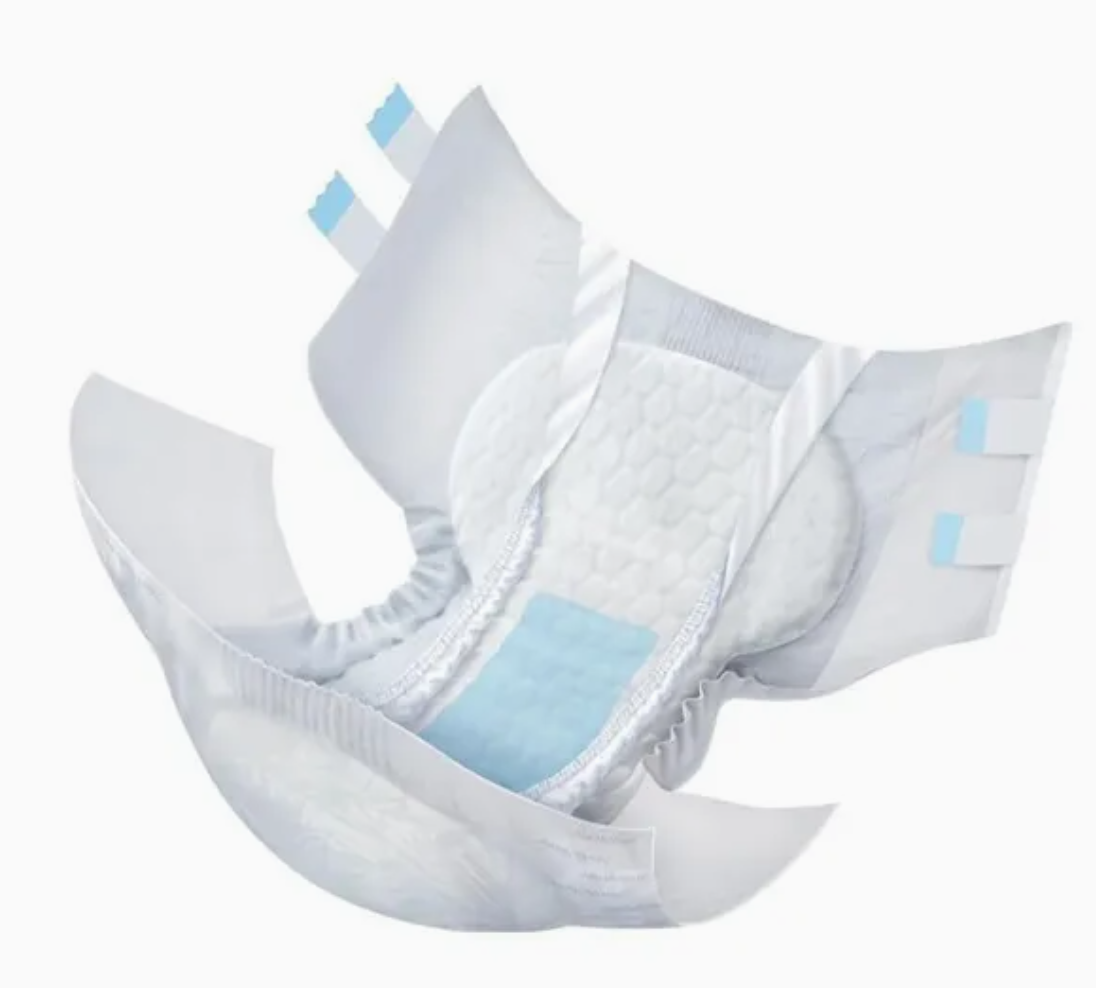
Incontinence Pants Specifically designed to manage urinary incontinence, their core function is to rapidly absorb large volumes of urine and lock in odor. The absorbent layer of incontinence pants typically employs a composite structure of superabsorbent polymer (SAP) and fluff pulp, which quickly converts liquid into a gel-like substance to prevent rewetting. Additionally, incontinence pants place particular emphasis on leak-proof design, featuring three-dimensional leak-proof barriers, elastic waistbands, and leg elastic bands to ensure that liquid does not escape during movement or lying down.
Menstrual Pants Specifically designed for women during menstruation, these primarily absorb menstrual blood rather than urine. The absorbent layer of menstrual pants usually consists of a cotton-soft top sheet and a breathable back sheet, with relatively smaller absorption capacity but greater emphasis on soft comfort and bacteriostatic properties. Since menstrual blood is more viscous than urine, menstrual pants have a slower absorption rate but focus more on reducing friction and allergen risks.
2. Absorption Capacity and Structural Comparison
Absorption Capacity The absorption capacity of incontinence pants typically ranges from 800ml to 1500ml, equivalent to 4-6 urination volumes; menstrual pants generally have an absorption capacity of 150-300ml, approximately equivalent to 3-4 sanitary pads. Incontinence pants are thicker and have a larger absorbent layer area, whereas menstrual pants are lighter and thinner, facilitating daily activities.
Absorption Speed Incontinence pants employ rapid fluid distribution technology, absorbing liquid within seconds and spreading it throughout the absorbent layer; menstrual pants require more time to absorb viscous liquid but maintain a drier surface, reducing stuffiness.
Leak-Proof Design The leak-proof system of incontinence pants is more complex, including dual leak-proof barriers, elastic waistbands, and leg elastic bands, with some products even featuring leak-proof skirt designs; menstrual pants primarily achieve leak-proofing through widened wings and elastic leg openings, suitable for nighttime use or heavy flow periods.
3. Materials and Comfort
Incontinence Pants The top sheet is typically made of non-woven fabric, with some high-end products incorporating skin-nourishing ingredients (such as aloe vera or vitamin E) to reduce skin irritation. The back sheet is mostly made of breathable PE film, balancing leak-proofing and breathability. For long-term bedridden users, incontinence pants are designed with easy-change structures, such as side-release tapes or tear-away designs.
Menstrual Pants Greater emphasis is placed on soft touch, with top sheets made of cotton-soft or silk-like materials to reduce friction; the back sheet uses ultra-thin breathable film to avoid stuffiness. Some products incorporate bacteriostatic ingredients to reduce the risk of gynecological inflammation.
III. Target Populations and Usage Scenarios
1. Target Populations for Incontinence Pants
- Elderly Individuals Due to age-related decline in sphincter muscle tone or neurological function, resulting in various types of incontinence (stress, urge, mixed)
- Postpartum Women Pelvic floor muscle damage after childbirth, commonly experiencing stress urinary incontinence (e.g., leaking when coughing or sneezing)
- Post-Operative Patients Recovery period after prostate surgery, bladder surgery, intestinal surgery, etc., potentially experiencing temporary incontinence
- Long-Term Bedridden Individuals Mobility limitations due to illness or disability, requiring caregiver assistance for changes
- Special Occupational Groups Long-distance drivers, surgeons, astronauts, military personnel, etc., who cannot easily access restrooms due to work environments
- Travelers Long-haul flights, trains, buses, etc., avoiding embarrassment when restrooms are unavailable
2. Target Populations for Menstrual Pants
- Menstruating Women As an upgraded alternative to sanitary pads, especially suitable for heavy flow, nighttime use, or extended activities
- Active Women During running, yoga, swimming, etc., menstrual pants provide more stable and effective leak-proofing than sanitary pads
- Postpartum Lochia Phase Heavy lochia discharge in the early postpartum period, where menstrual pants offer more comprehensive protection
- Individuals with Dual Needs for Menstruation and Incontinence Some women experiencing both menstruation and incontinence during menopause or postpartum period may choose menstrual pants or hybrid products
IV. From Understanding to Selection Detailed Purchasing Guide
1. Clarify Needs Tailor-Made Solutions
- Type of Incontinence Stress incontinence (e.g., leaking when coughing) requires lightweight products with moderate absorption capacity; urge incontinence (e.g., sudden urge to urinate) requires products with fast absorption speed; complete incontinence requires products with high absorption capacity and strong leak-proofing.
- Mobility Level Individuals who can move independently should choose pant-style or pull-up products for easy dressing and removal; bedridden individuals should choose tape-style or two-piece products for easier caregiver changes.
- Frequency of Use Daily use requires attention to cost-effectiveness, with bulk purchasing options available; special scenarios (e.g., travel, events) should consider portable or discreet products.
2. Key Indicators Understanding Product Specifications
- Absorption Capacity (ml) Choose based on personal urination volume or severity of leakage. Mild incontinence 300-500ml; moderate incontinence 500-800ml; severe incontinence 800ml or above.
- Leak-Proof Grade Check product descriptions for leak-proof barriers, elastic waistband, leg elastic bands, etc. For nighttime use, choose products with leak-proof skirt design.
- Breathability Select products with breathable micro-pores or breathable film back sheet to avoid eczema or skin redness.
- Size Fit Measure waist and hip circumference and refer to the product size chart. Too small sizes will cause tightness and leakage; too large sizes will shift and fail to fit properly.
- Material Safety Choose products verified as free from fluorescent agents and formaldehyde, passing skin irritation tests. Sensitive skin users may opt for medical-grade or nursing-grade series.
3. Product Types Selection by Form
- Pant-Style (Pull-Up) Worn like underwear, suitable for mobile individuals who can change independently. Reference brands Depends, Tena, Dr. P, Anerke.
- Tape-Style (DiaperPad) Similar to baby diapers, secured with side tapes, suitable for bedridden individuals or those requiring frequent changes. Reference brands Kao (Reliance), Bester, Silky.
- Two-Piece (Underpad + Pad) Used for bedridden care, requiring combination with underpads, lower cost but less convenient for changes.
- Special Menstrual Pant Forms Mostly high-waist panty style, with some products featuring ultra-thin core technology, only 0.5cm thick, for discreet use.
4. Scenario-Based Purchasing Recommendations
- Daily Home Use Prioritize pant-style incontinence pants, choosing lightweight type (500ml absorption capacity) for daytime, and thicker type (1000ml+ absorption capacity) for nighttime. Recommended brands Depends Silhouette series, Tena Dry series.
- Outdoor Activities Choose discreet incontinence pants, such as ultra-thin or pant-style designs, paired with loose outerwear. Recommended brands Dr. P Active series, Anerke Freedom series.
- Post-Operative Care Choose tape-style incontinence pants for easy side changes by caregivers without removing pants. Recommended brands Reliance Medical Care series, Bester Nursing series.
- Mixed Menstrual and Incontinence Needs Choose menstrual pants, such as Sofy Overnight series, Laurier Joyful series, or incontinence pants specifically designed for women, such as Whisper female incontinence care series.
- Long-Term Elderly Use Consider cost-effectiveness, choosing bulk packaging or online bulk purchases, such as Depends Maximum Absorbency series (60-count packs), Tena Long-Term series (purchase by case).
V. Common Misconceptions and Precautions
1. Misconception Clarification
- Misconception 1 Incontinence pants and menstrual pants are interchangeable
In reality, their absorption structures, leak-proof designs, and breathability differ significantly. Using menstrual pants as substitutes for incontinence pants will result in leakage and skin problems; using incontinence pants as substitutes for menstrual pants may cause discomfort due to the overly thick absorbent layer.
- Misconception 2 Incontinence pants are only for the elderly
Incontinence issues can occur at any age, including postpartum women, athletes, post-operative patients, etc. Choosing appropriate products can effectively address embarrassment and enhance confidence.
- Misconception 3 Menstrual pants are only for women with heavy flow
Menstrual pants are also suitable for women experiencing menstrual leakage (e.g., postpartum, menopausal) or for situations requiring extended protection (e.g., swimming, travel).
2. Usage Precautions
- Change Frequency Incontinence pants should be changed every 4-6 hours; menstrual pants every 2-4 hours (depending on flow). Prolonged use without changing increases the risk of skin infection.
- Skin Care Clean the skin after each change and apply barrier cream or isolation cream, especially for bedridden individuals or those with frequent incontinence.
- Storage Conditions Store in a cool, dry place away from direct sunlight or moisture to prevent product deterioration.
- Environmental Awareness Consider biodegradable or eco-friendly material brands, such as Depends Eco series, to reduce waste generation.
VI. Conclusion Finding the Solution That Works Best for You
The selection of adult diapers ultimately comes down to precise matching of personal needs, lifestyle scenarios, and physical conditions. Although incontinence pants and menstrual pants both belong to the category of absorbent care products, their design intent, functional focus, and target populations are distinctly different.
- If you are facing urinary incontinence issues (regardless of type), prioritize incontinence pants, focusing on absorption capacity, leak-proof design, and breathability, and choose between pant-style or tape-style based on mobility level.
- If you require menstrual protection, menstrual pants are an upgraded version of sanitary pads, emphasizing comfort, bacteriostatic properties, and discreet design, and can be used in combination with sanitary pads.
- If you are experiencing both menstruation and incontinence simultaneously, choose incontinence pants specifically designed for women or hybrid products, such as the Depends Women's Care series.
Finally, please remember Using adult diapers is not a matter of shame, but an active management of quality of life. Through scientific selection, you can completely free yourself from the inconvenience of leakage or menstruation and enjoy a more free and confident life. We hope this guide helps you find the most suitable product, making every day more comfortable and composed.